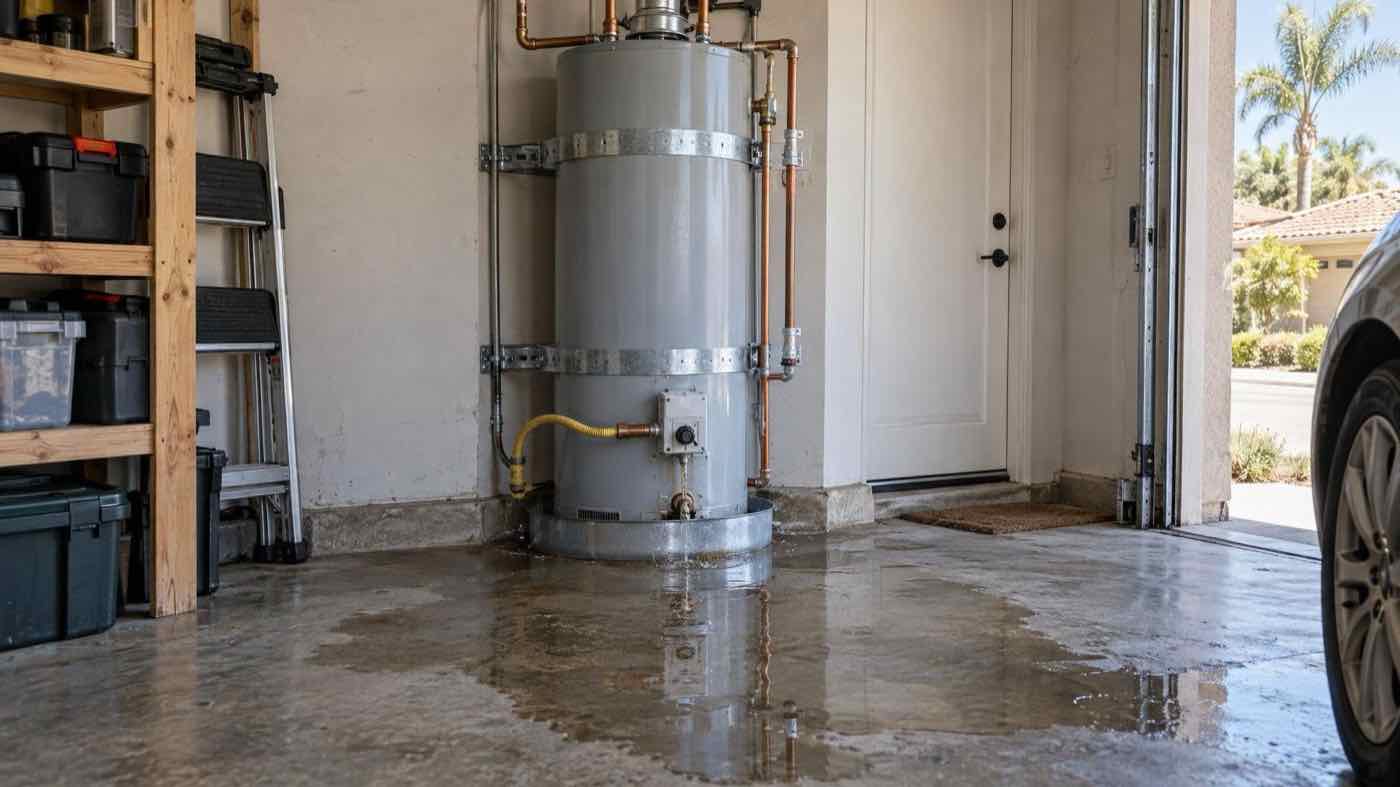
What to Do First When a Water Heater Leaks
Stop the water, cut the energy source, then protect the floor. These steps take a few minutes and limit how far the water spreads.
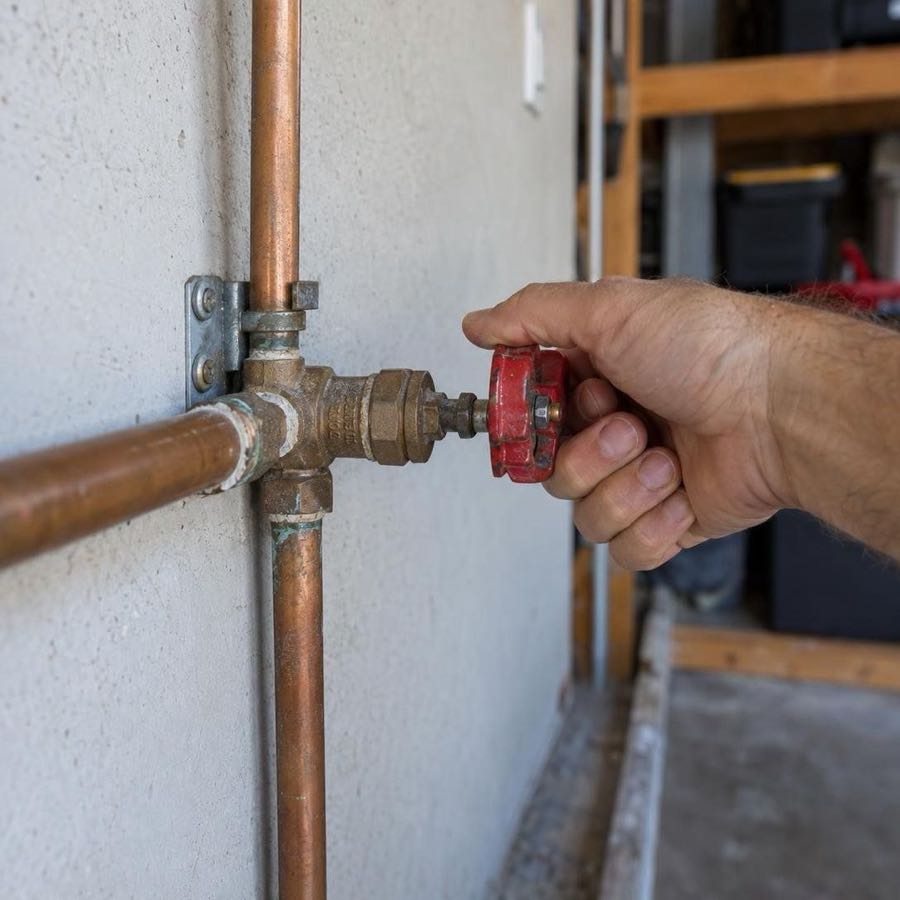
- Close the cold-water inlet valve on the pipe at the top of the heater
- If water keeps coming, shut off the home's main water valve
- Electric heater: switch off its breaker. Gas heater: turn the control to off or pilot. If you smell gas, leave and call the gas company
- Keep away from standing water near outlets or the heater's wiring
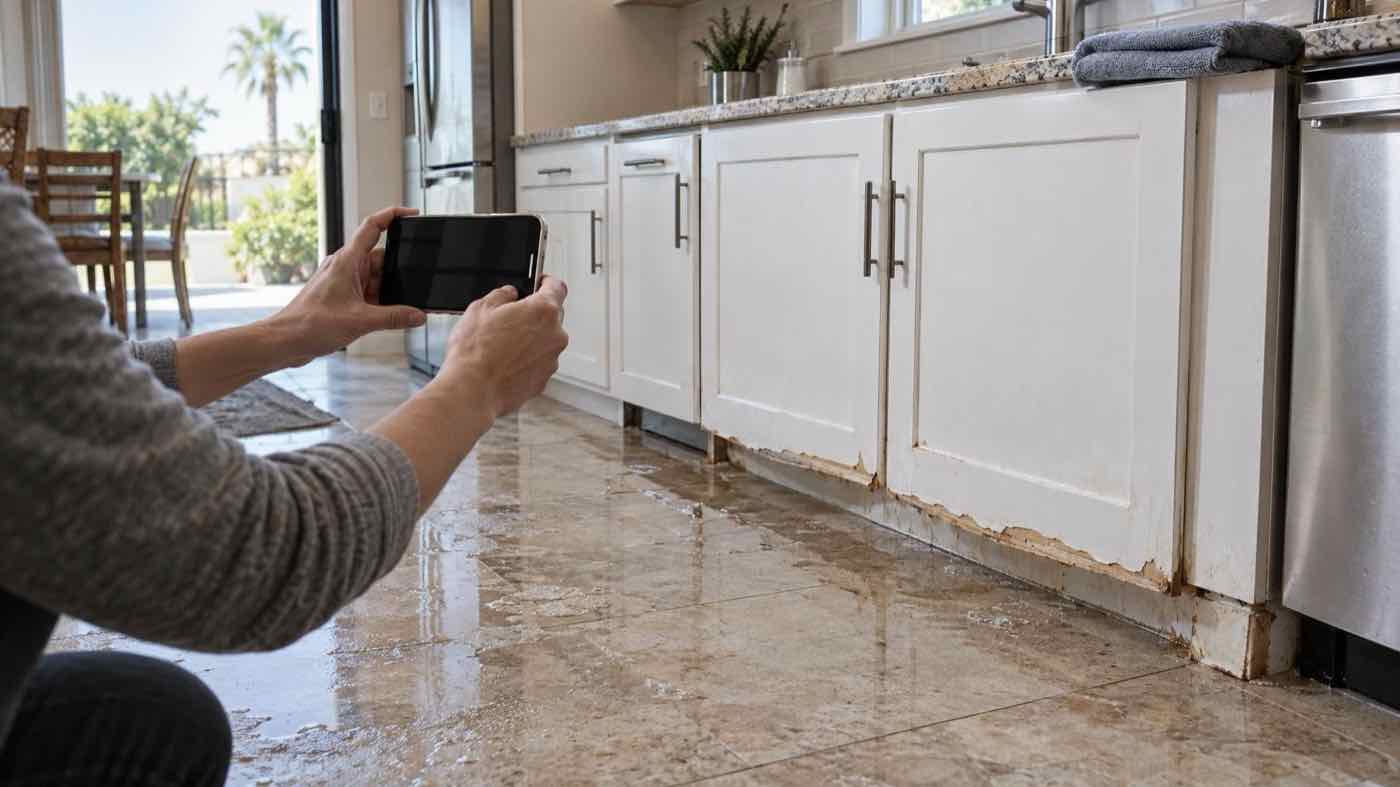
- Move rugs, boxes and furniture out of the wet area and photograph the damage
- Call a plumber for the heater and a restoration company for the water
Why Is My Water Heater Leaking?
Most water heater leaks come from a loose fitting, the temperature and pressure relief valve, the drain valve or a corroded tank.
Tank heaters often last around 8 to 12 years, though water quality, maintenance and installation change that. A leaking tank on an older unit usually means replacement, not repair.
- Loose or corroded connections on the hot and cold lines at the top
- The temperature and pressure (T&P) relief valve, which can release water if pressure or temperature is too high; never cap or plug it
- A drain valve at the bottom that is loose or worn
- A rusted tank: water pooling under the heater with no other source usually means the tank itself has failed
How Much Damage Can a Water Heater Leak Cause?
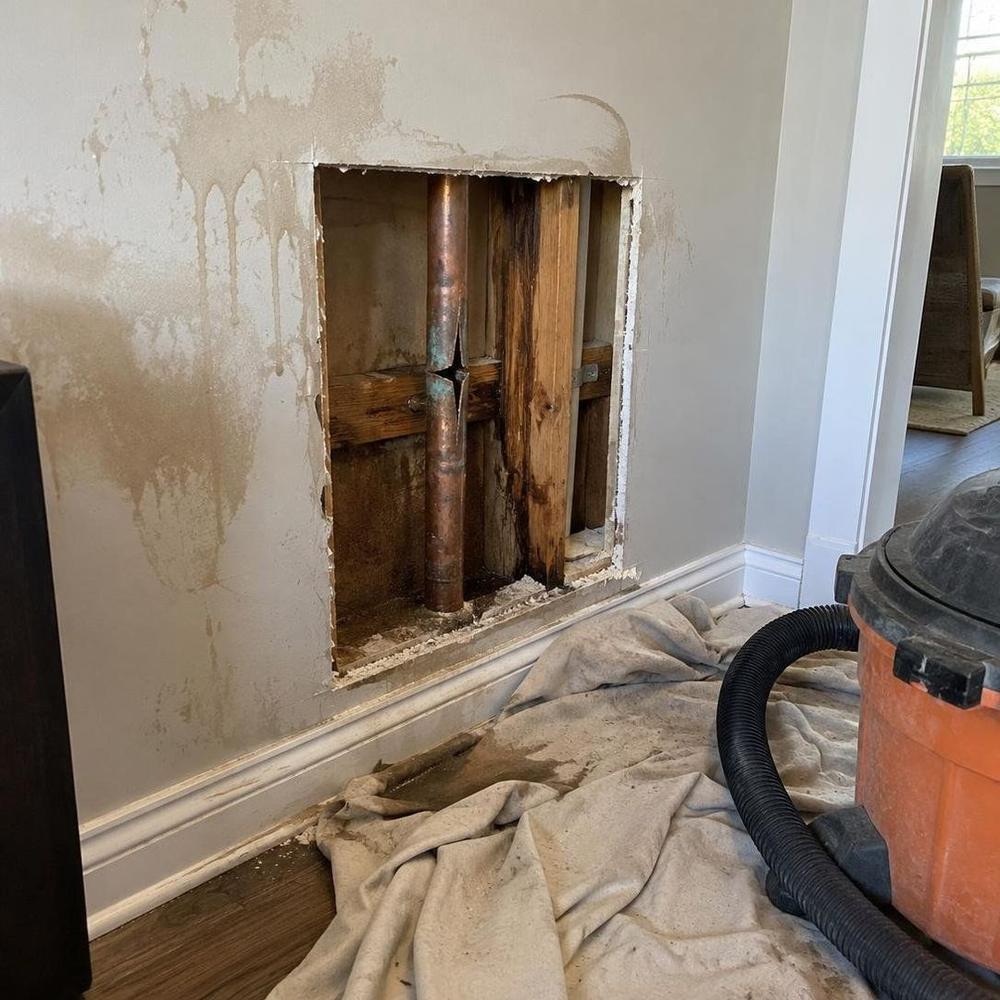
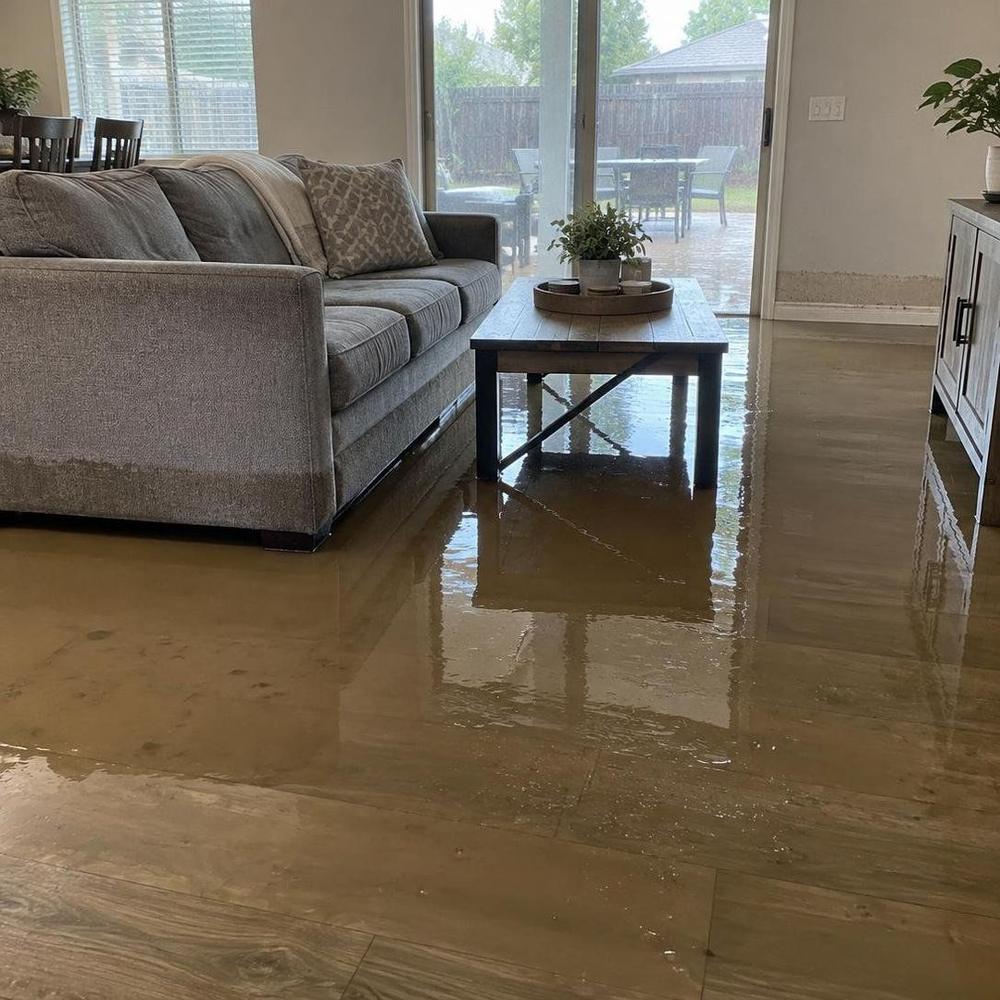
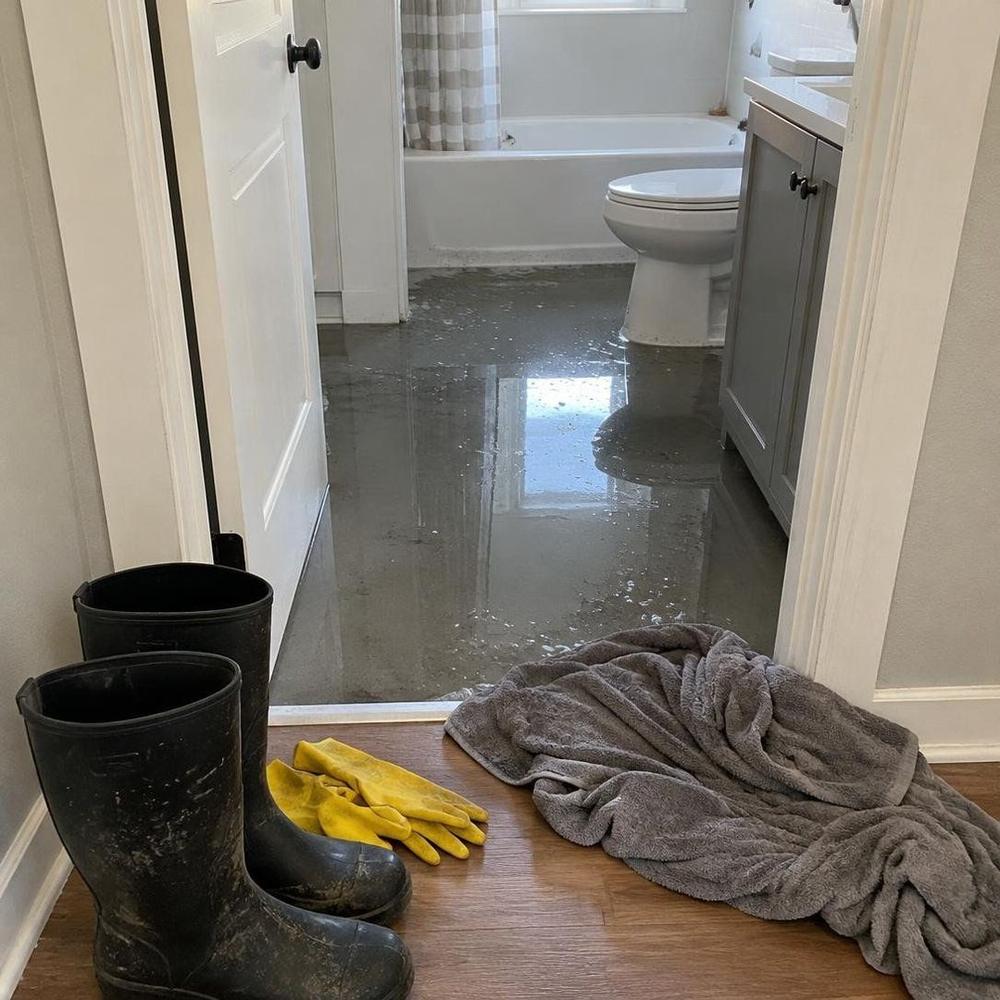
A failed tank can empty its full contents onto the floor, and the supply line keeps refilling it until the water is shut off. In a garage that may mean a wet slab; in a closet or attic it can mean wet walls, ceilings and floors in the rooms around it.
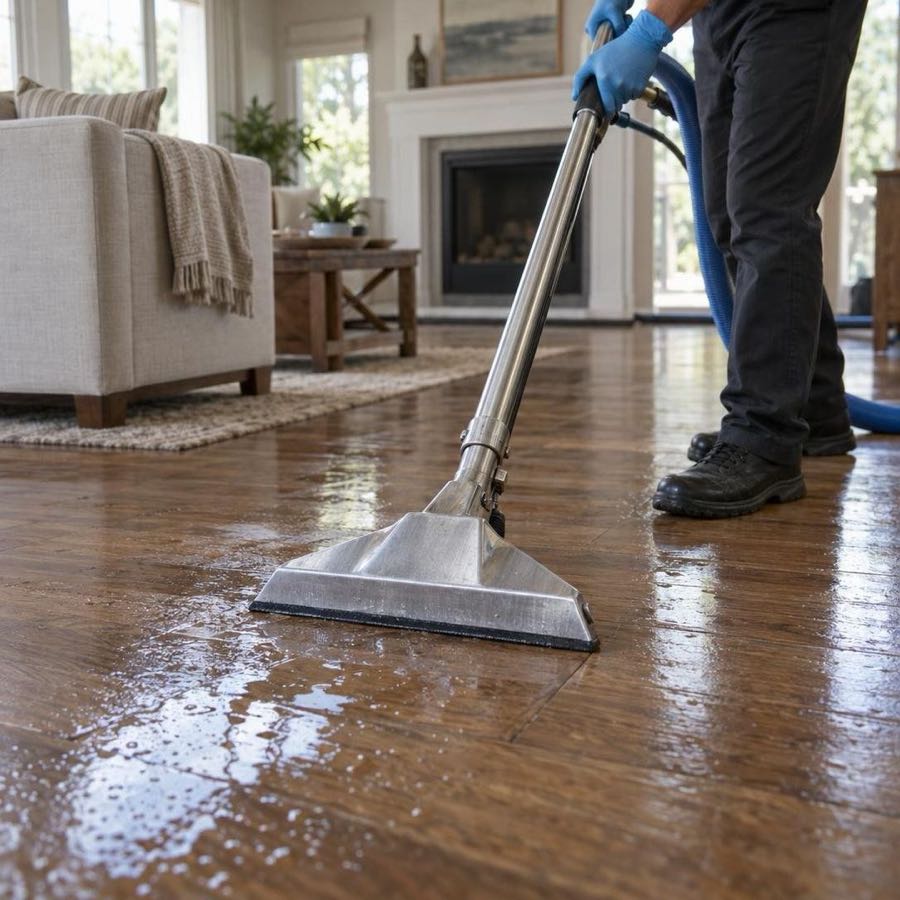
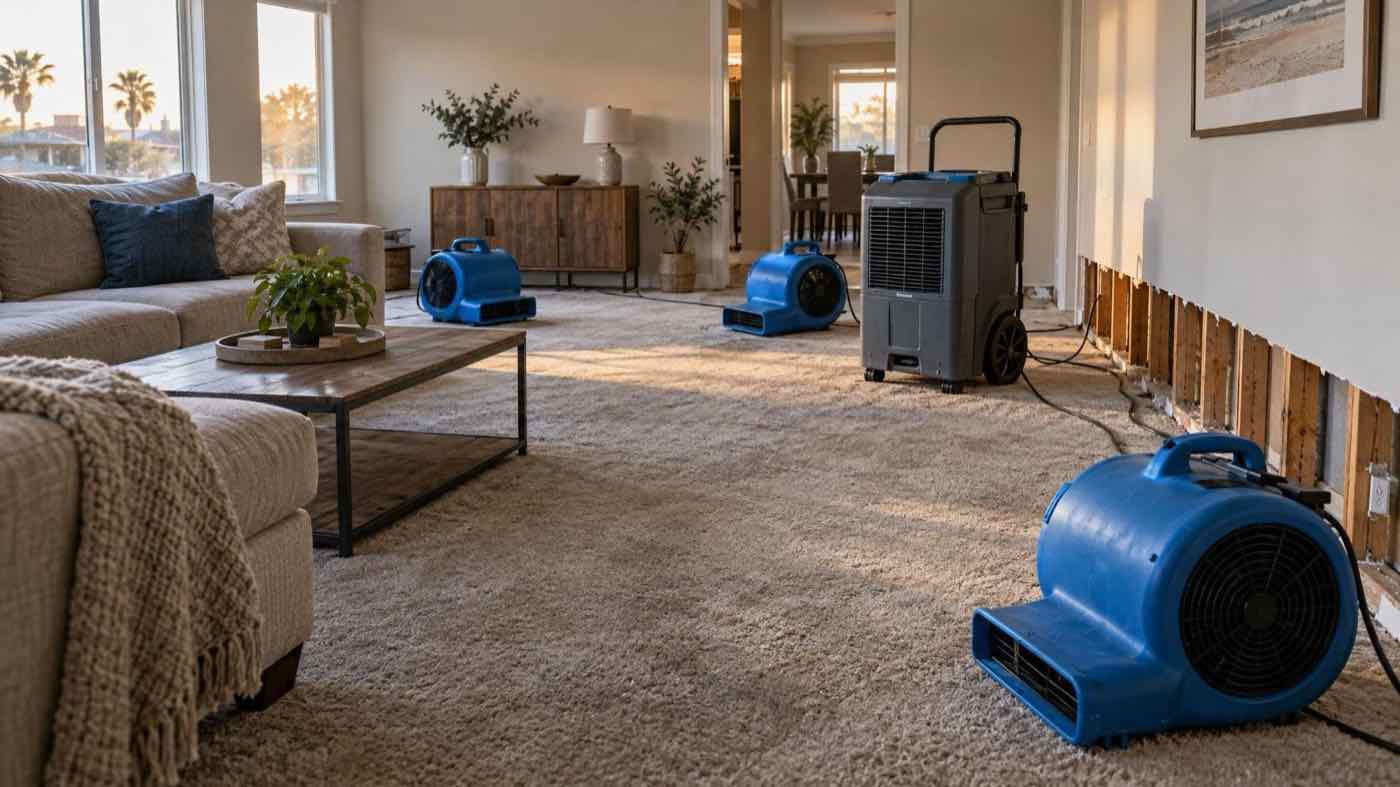
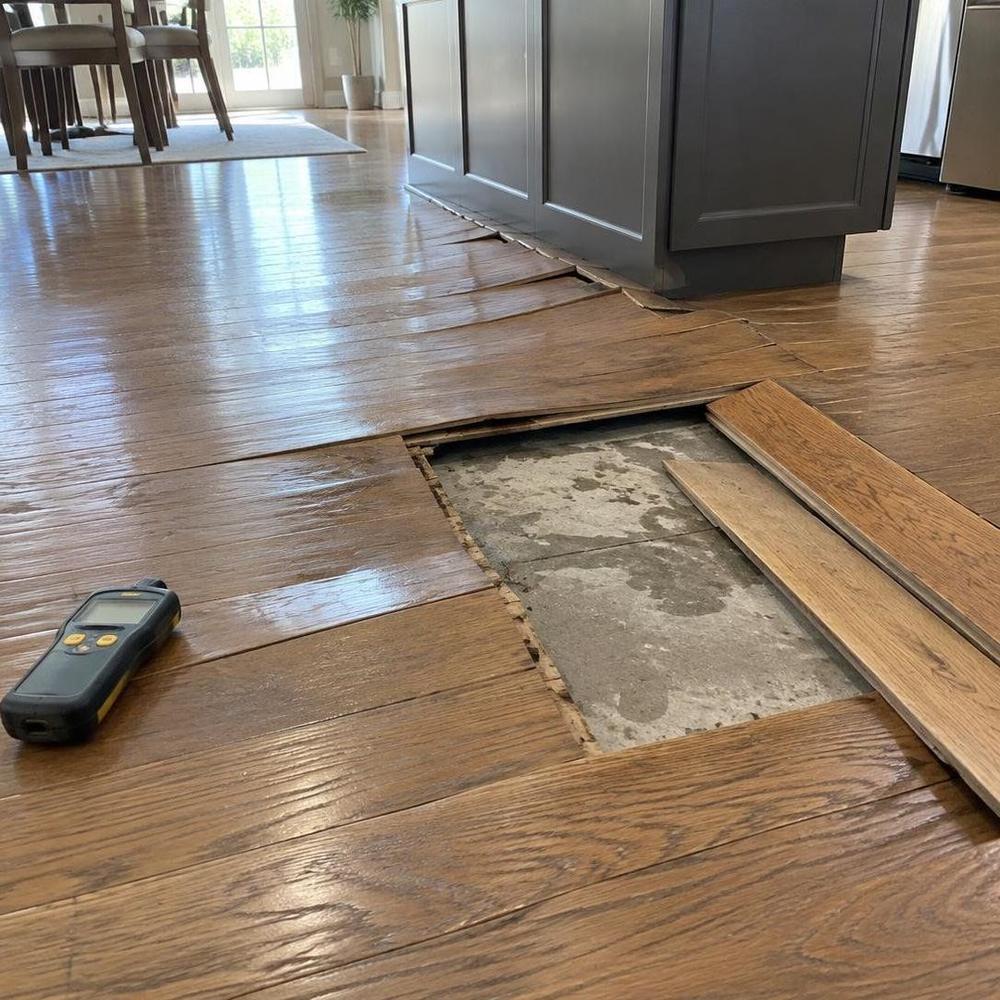
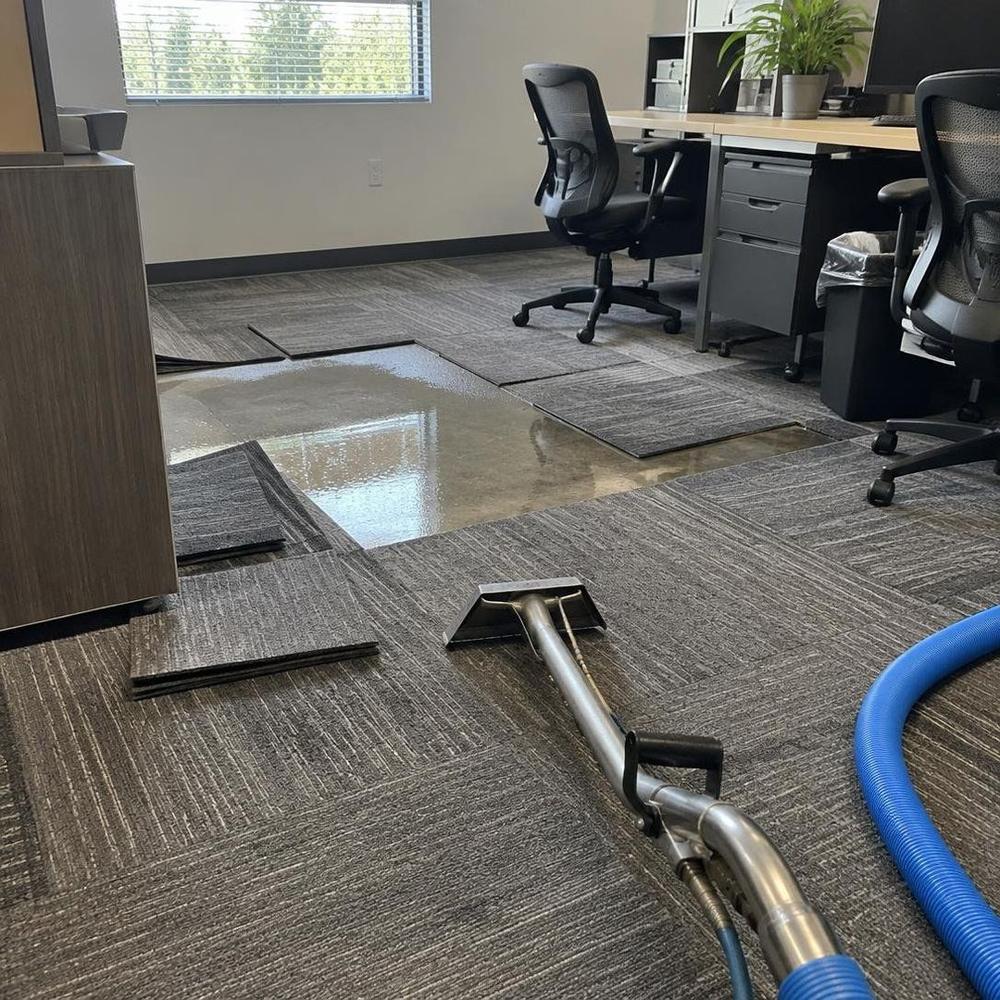
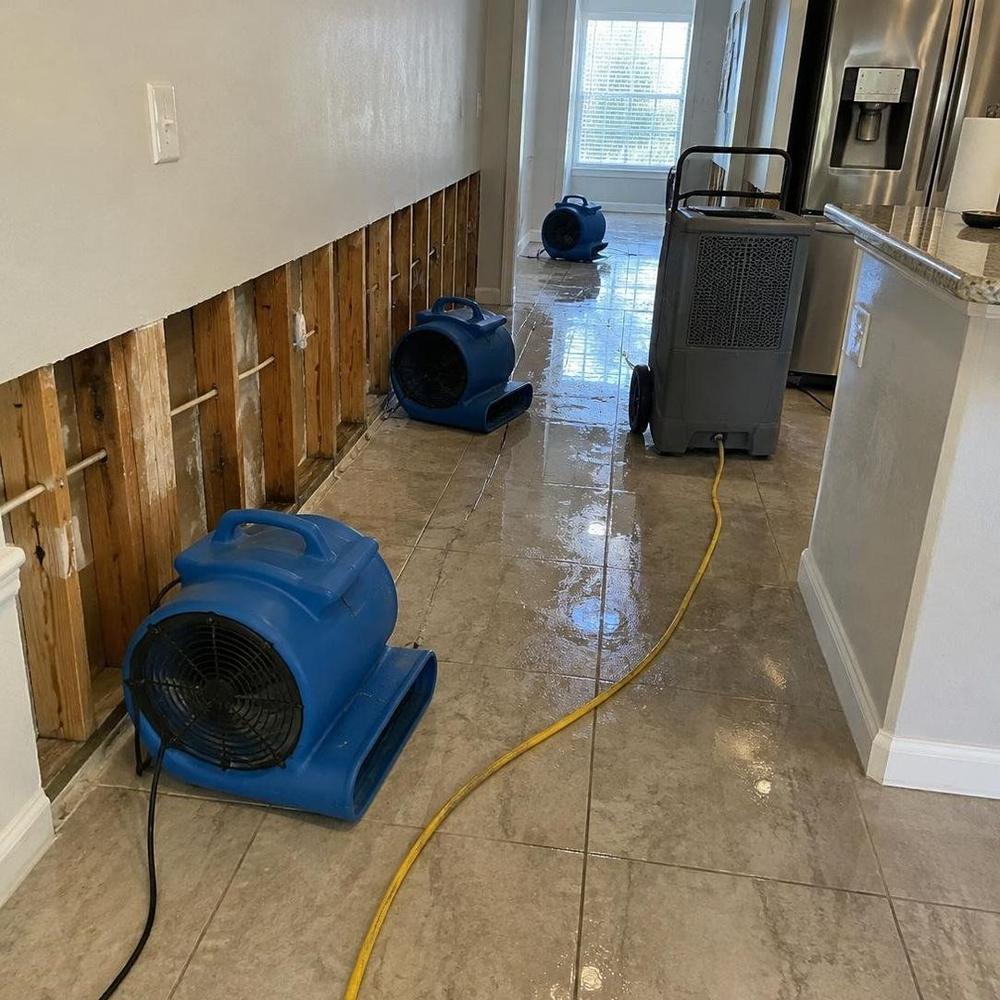
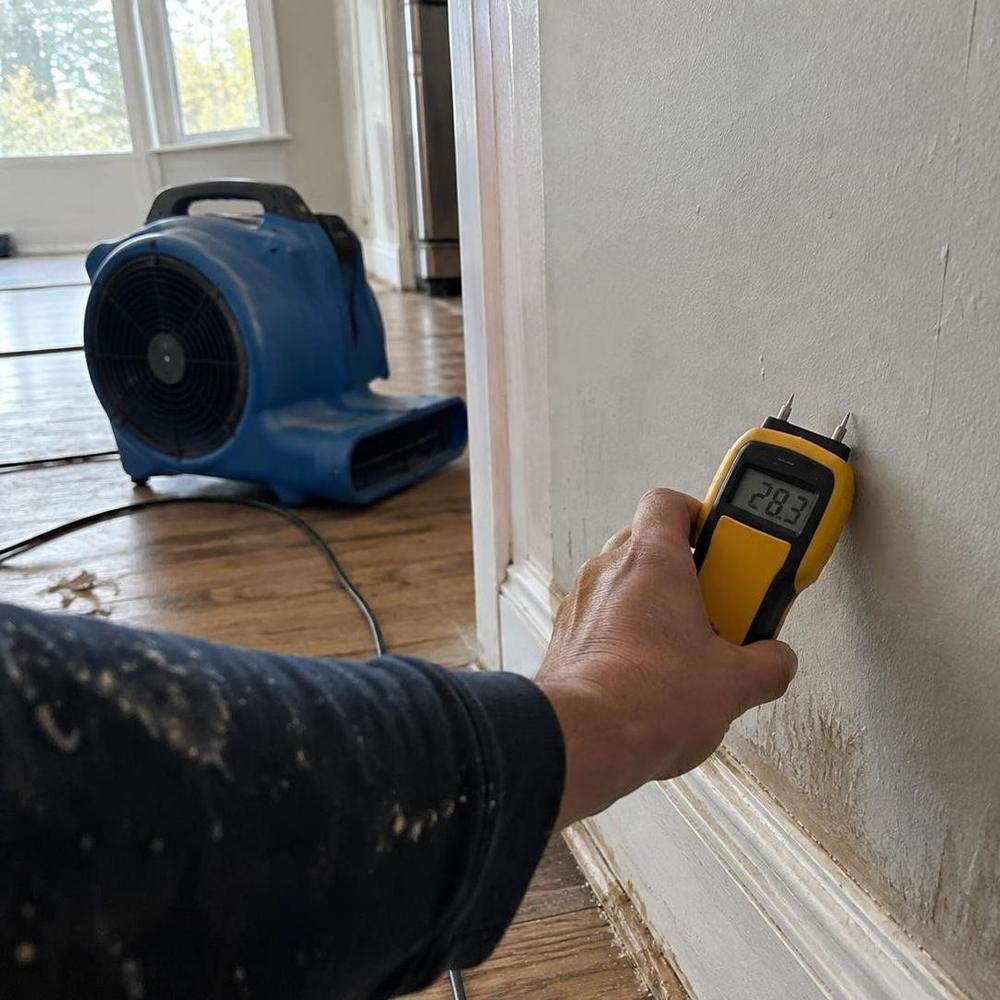
Water from a heater is clean water, so most materials can be dried in place if drying starts quickly. The EPA advises drying within 24 to 48 hours to help prevent mold. A [water mitigation](/water-mitigation-service/) crew extracts the water, checks the walls and subfloor with moisture meters and sets drying equipment. See [how long water damage takes to dry](/blog/how-long-water-damage-takes-to-dry/) for typical timelines.
California Water Heater Strapping Rules
California Health and Safety Code section 19211 requires water heaters to be braced, anchored or strapped to resist falling or moving during an earthquake.
A heater that tips in a quake can break its water and gas connections, which adds a flood and a gas hazard to the shaking. When a heater is replaced, the new one has to be strapped, and local permits apply. A drain pan under the heater can route small leaks to a drain, but it does not stop a tank failure.
Does Insurance Cover a Water Heater Leak?
Many homeowners policies cover the water damage from a sudden water heater failure but not the heater itself.
A slow leak that went unnoticed for weeks is often treated differently from a sudden tank failure. Photograph the damage before cleanup and report the claim quickly. Read more in [does home insurance cover water damage in California](/blog/homeowners-insurance-water-damage-california/).